Overland
Redesigning a trucking insurance portal for agents & underwriters. A modern UX revamp of a complex insurance platform used across the commercial trucking space.
Insurance
B2B SaaS
My Role
UX/UI Designer
Duration
Apr 2024 - Apr 2025
Platform
Web-Based Agent & Underwriter Portal

Overview
I worked as a core member of the UX/UI design team on Overland (real company name omitted due to NDA) , a B2B insurance portal used by agents (and underwriters) who quote and manage policies for trucking and cargo companies across the U.S. Our goal was to transform a dated, error-prone platform into a modern, intuitive system that reflects the complexities of commercial insurance while improving speed, visibility, and agent trust.
We restructured the user experience to simplify workflows, increase transparency into policy and account-level actions, and reduce drop-off at critical steps like quoting and renewals. Our work included building a design system from scratch, rearchitecting the platform’s navigation, and designing flows for every stage of the policy lifecycle.
Note: This case study showcases a modified version of the original work due to NDA restrictions. All content, data, and visuals have been adapted to protect confidential information while accurately representing the design process and outcomes.
My Role
As a UX/UI Designer on the product team, I:
Helped build a scalable design system from scratch
Re-architected platform navigation and menu structure
Designed end-to-end flows for quotes, endorsements, cancellations, renewals, and reinstatements
Created detailed prototypes for testing and handoff
Simplified application and checkout experiences
Streamlined workflows for managing multiple policies per account
Contributed to usability testing and continuous iteration
Collaborated closely with developers, product leads, and stakeholders
The Objective
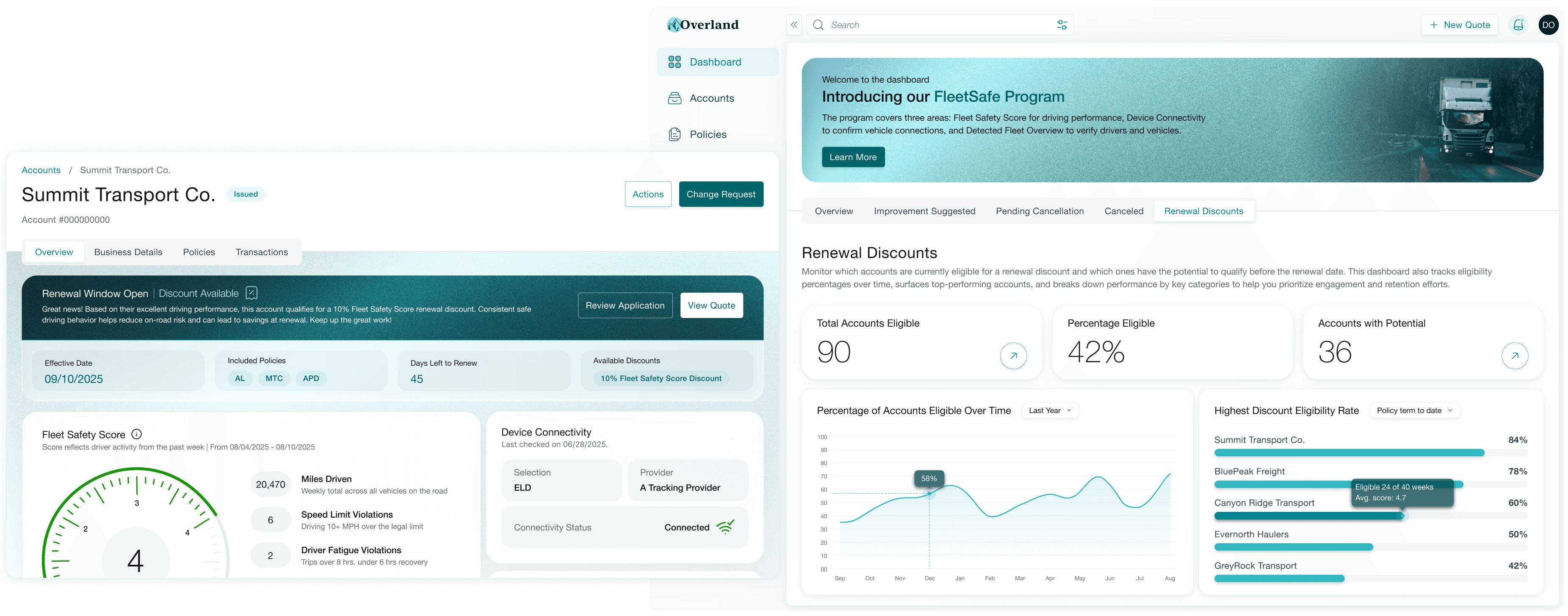
The goal was to streamline agent workflows by simplifying policy management across accounts, clarifying the logic between account-level and policy-level actions, and improving visibility into cancellation risks such as poor driving behavior.
We aimed to reduce drop-off rates by creating a more efficient and intuitive quoting flow, minimize incomplete or duplicated submissions through better account-level context, and centralize communication to ensure agents could manage submissions with greater clarity and speed.
Design Process
We followed a user-centered approach to redesign a complex insurance platform, prioritizing balancing agent needs with business priorities.
Stakeholder Interviews. Uncovered workflow pain points and platform limitations
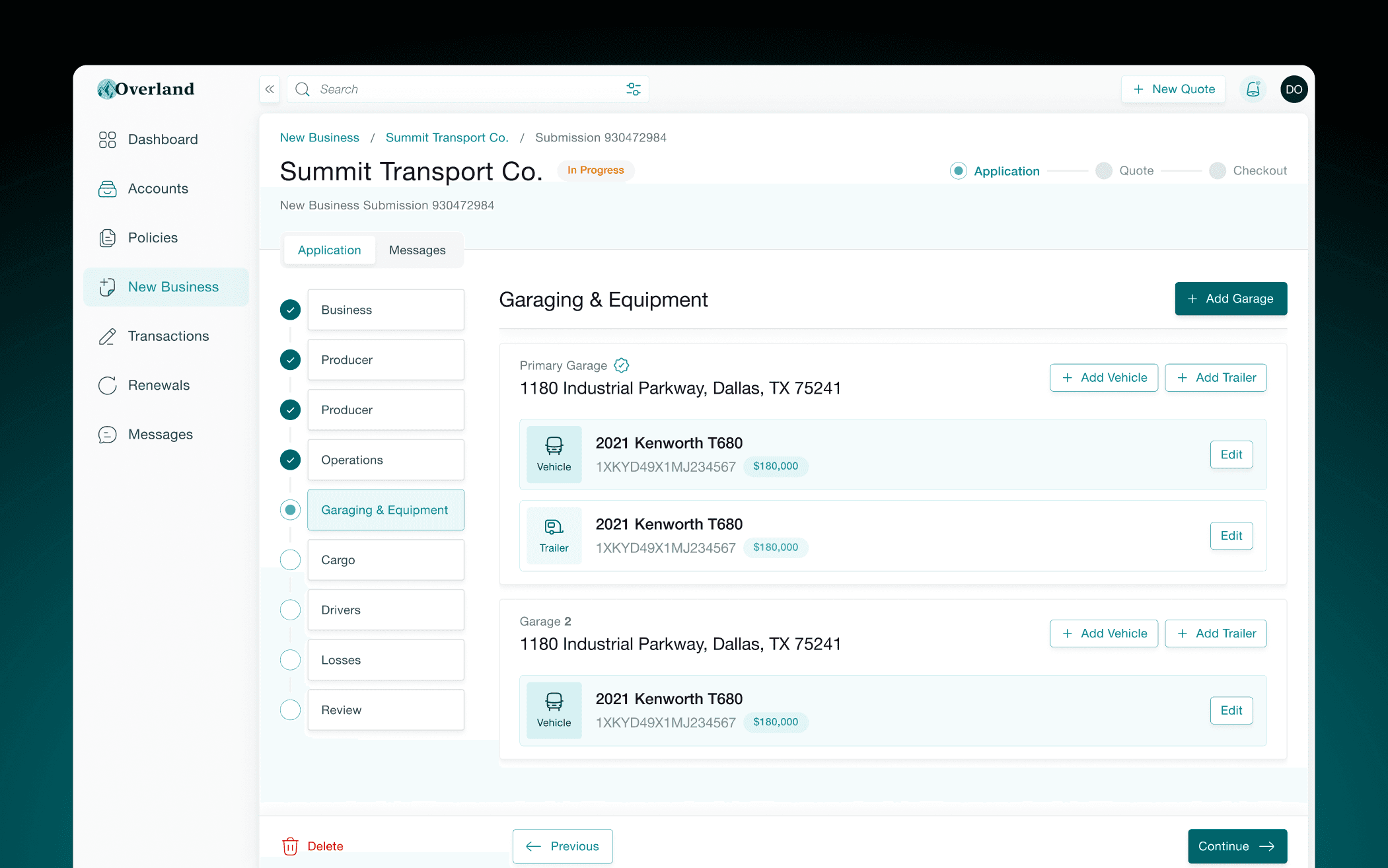
Information Architecture Overhaul. Structured the policy lifecycle with clear stages and views
Design, Prototyping & Testing. Designed, prototyped, and tested simultaneously. Iterated on all flows like quoting, renewals, and endorsement both for agents and underwriters.
Scalable UX Foundation. Built a consistent design system to support development and future growth
This process helped us transform a fragmented platform into a clearer, faster experience for agents and underwriters.
Solution
Navigation & Structure Redesign
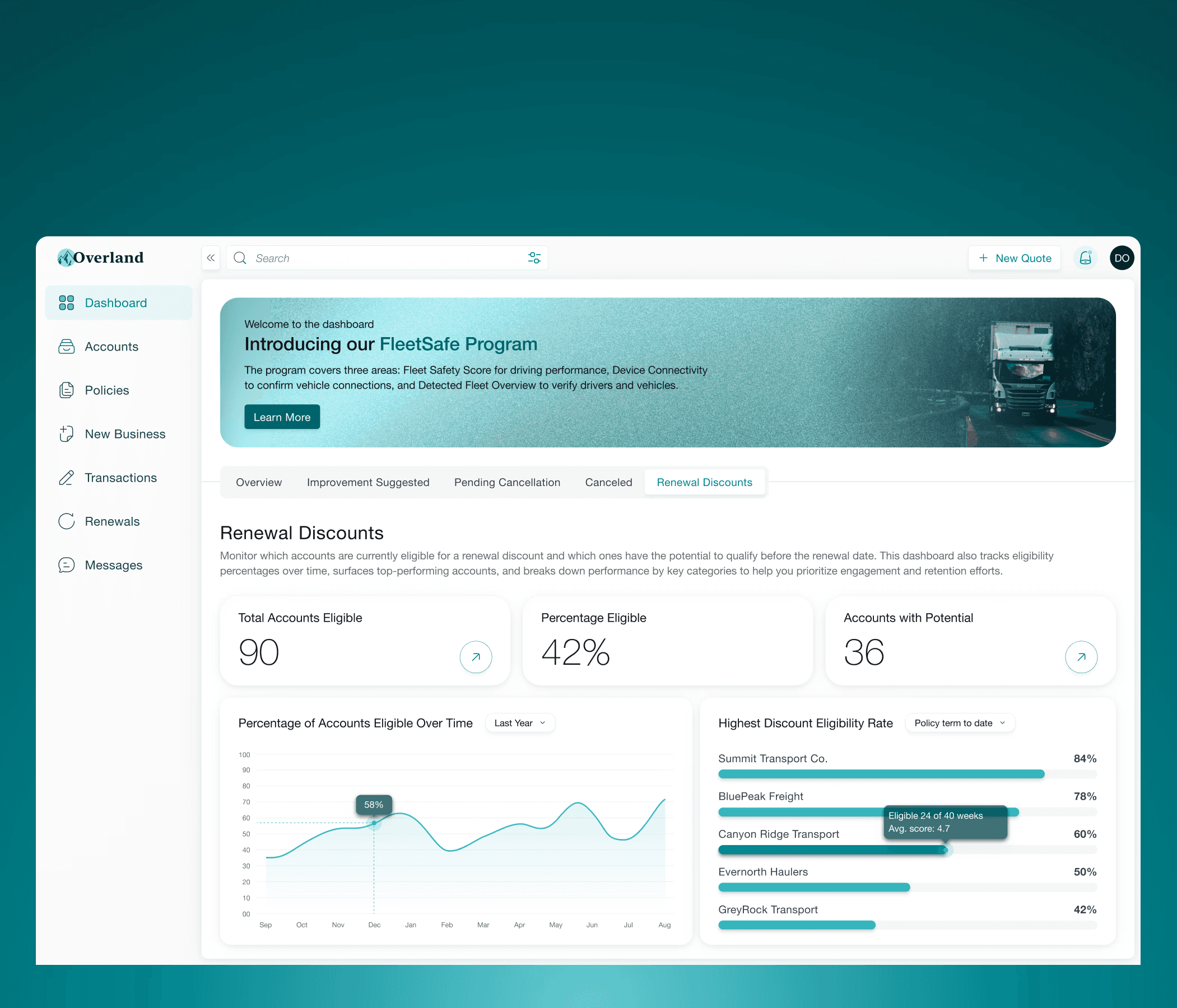
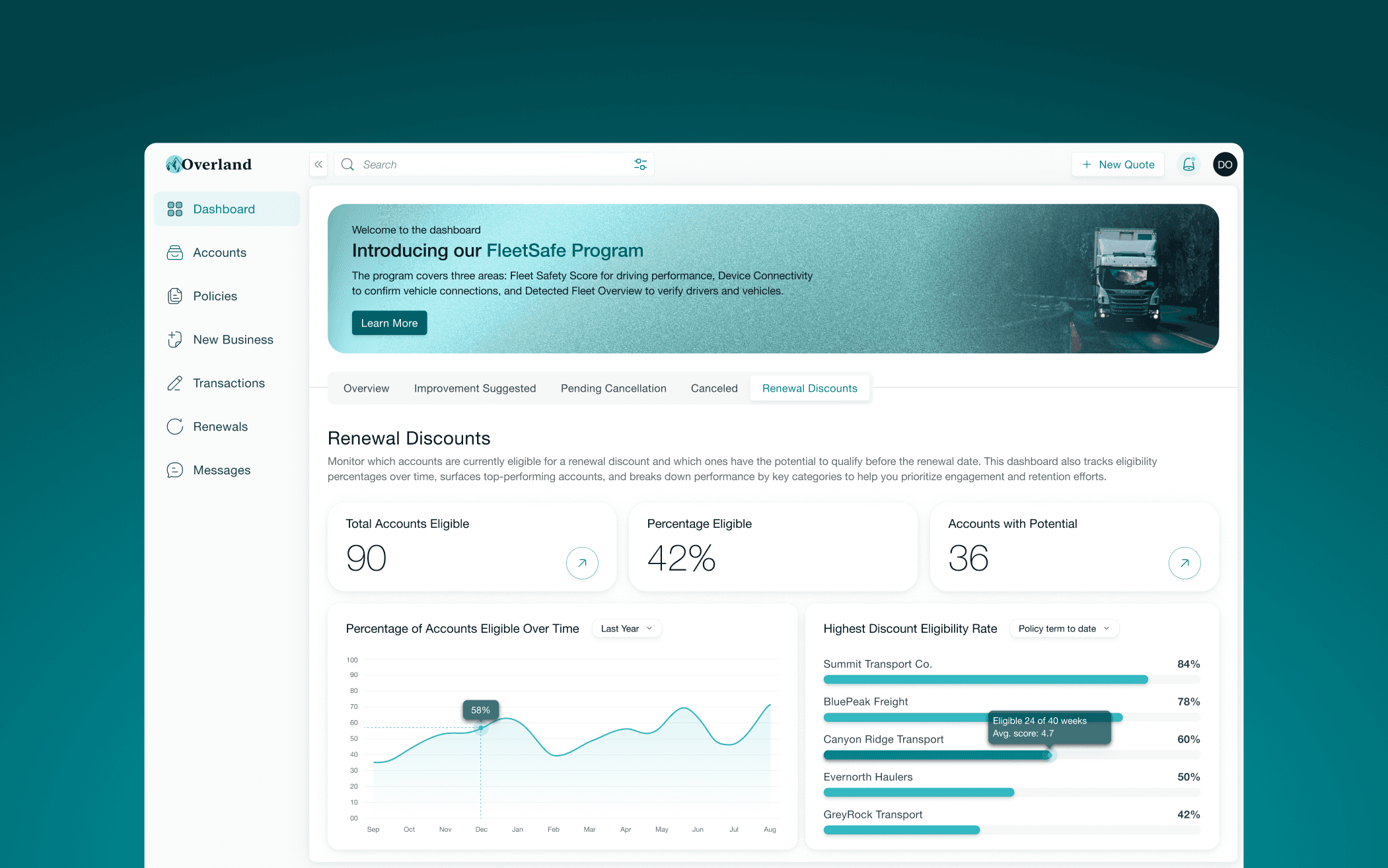
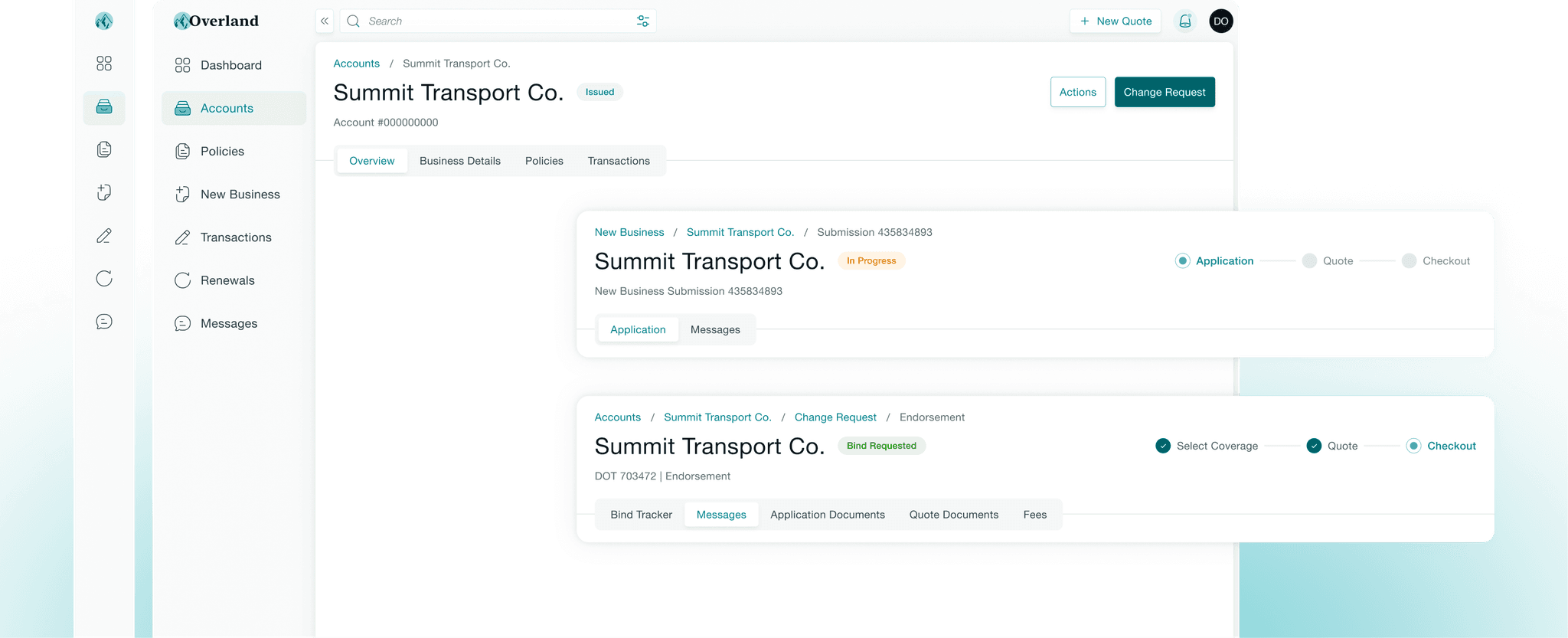
We redesigned the platform structure to align with how agents actually work—organizing key actions around the account lifecycle. The final navigation included:
Accounts. A centralized view of all accounts, each representing one business with multiple associated policies
Policies. A snapshot of all active coverages
New Business. Submission and quoting workflows
Transactions. Endorsements, cancellations, and coverage changes
Renewals. Expiring policies and incentive-based renewal offers
Messages. Centralized system updates and agent-admin communication
We also introduced global filters and persistent navigation to improve orientation and streamline cross-module access.
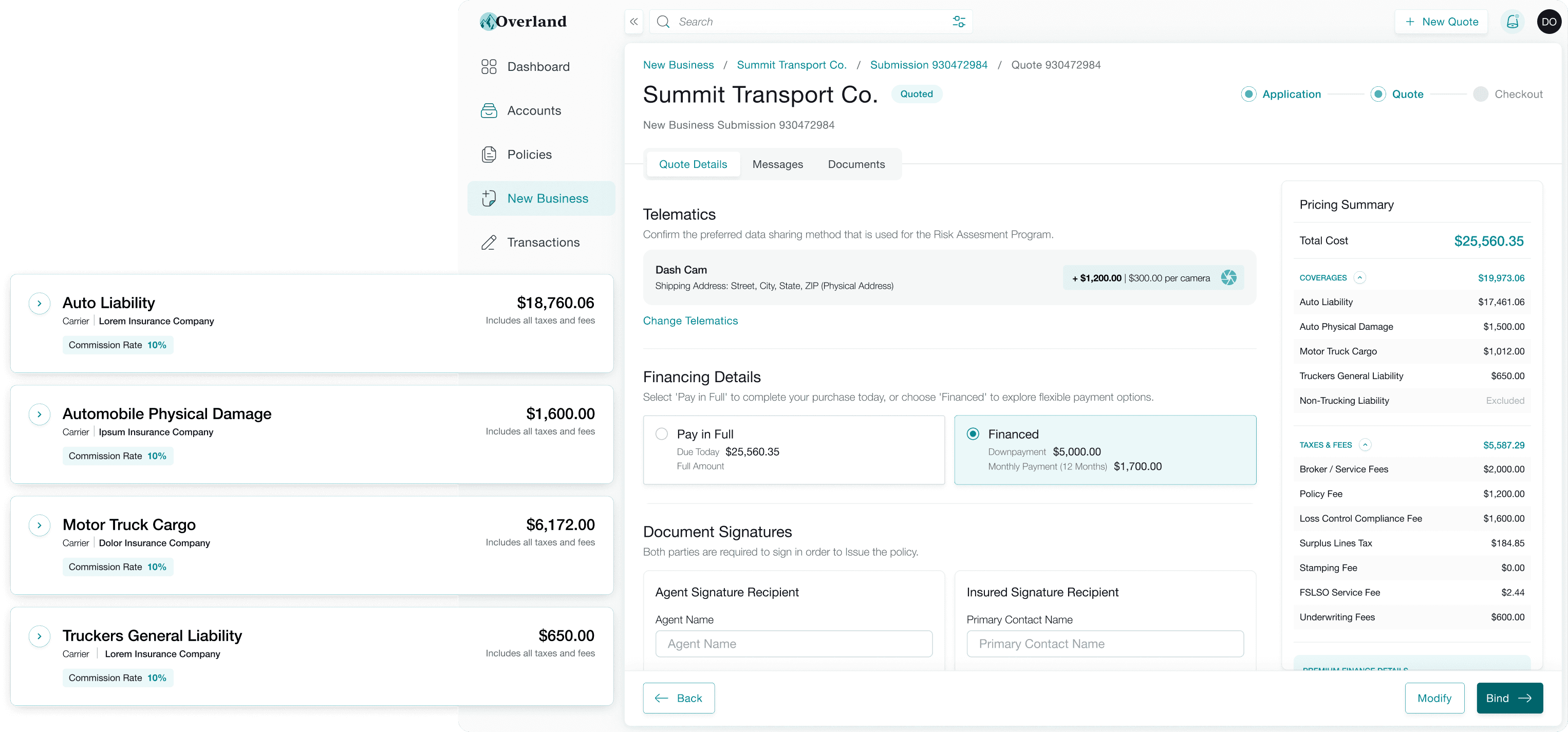
Making Pricing and Payments Clear Enough to Commit
The legacy quote experience created friction at the most critical moment: commitment. Agents and customers struggled to understand coverage details, payment and finance options, and operational requirements like telematics and shipment coverage. Pricing uncertainty and unclear next steps (especially around payments and signatures) led to hesitation, delayed decisions, and abandoned quotes, directly impacting bind rates.
Our Solution:
Clear, consolidated visibility into coverage amounts, inclusions, and exclusions directly on the quote page
Transparent presentation of premiums, fees, and finance options to support confident payment decisions
A simplified, guided signature flow that made completing required signatures fast and predictable
Signature tracking that clearly showed signer status and remaining steps
In-context explanations of telematics requirements and how they affect coverage and pricing
By making coverage, payments, and commitments explicit and easy to follow, agents could confidently explain policies, move customers through signing faster, and increase successful binds.
Clarifying Change Requests
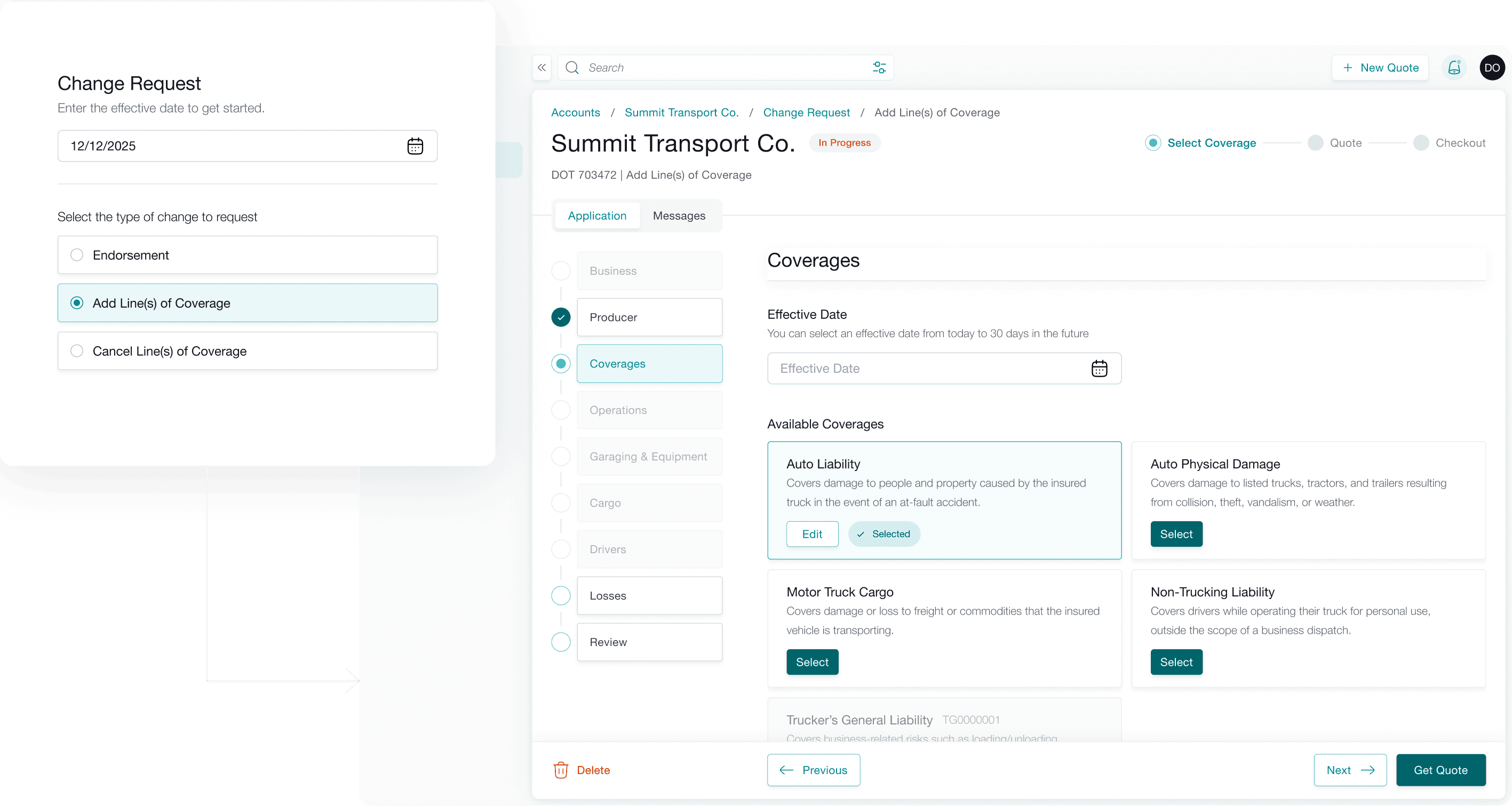
Agents previously struggled to understand whether a change affected a single policy or an entire account, leading to critical errors.
Our Solution:
We worked with stakeholders to define clear business rules, then introduced a structured Change Request flow. From the Account Overview, agents now:
Select the request type (endorsement, cancellation, or new policy)
Select which policies of that account it should apply to (one policy, multiple, or entire account)
We added clear UI copy and tooltips to clarify logic—reducing confusion and preventing mistakes.
DOT Lookup for Account Awareness
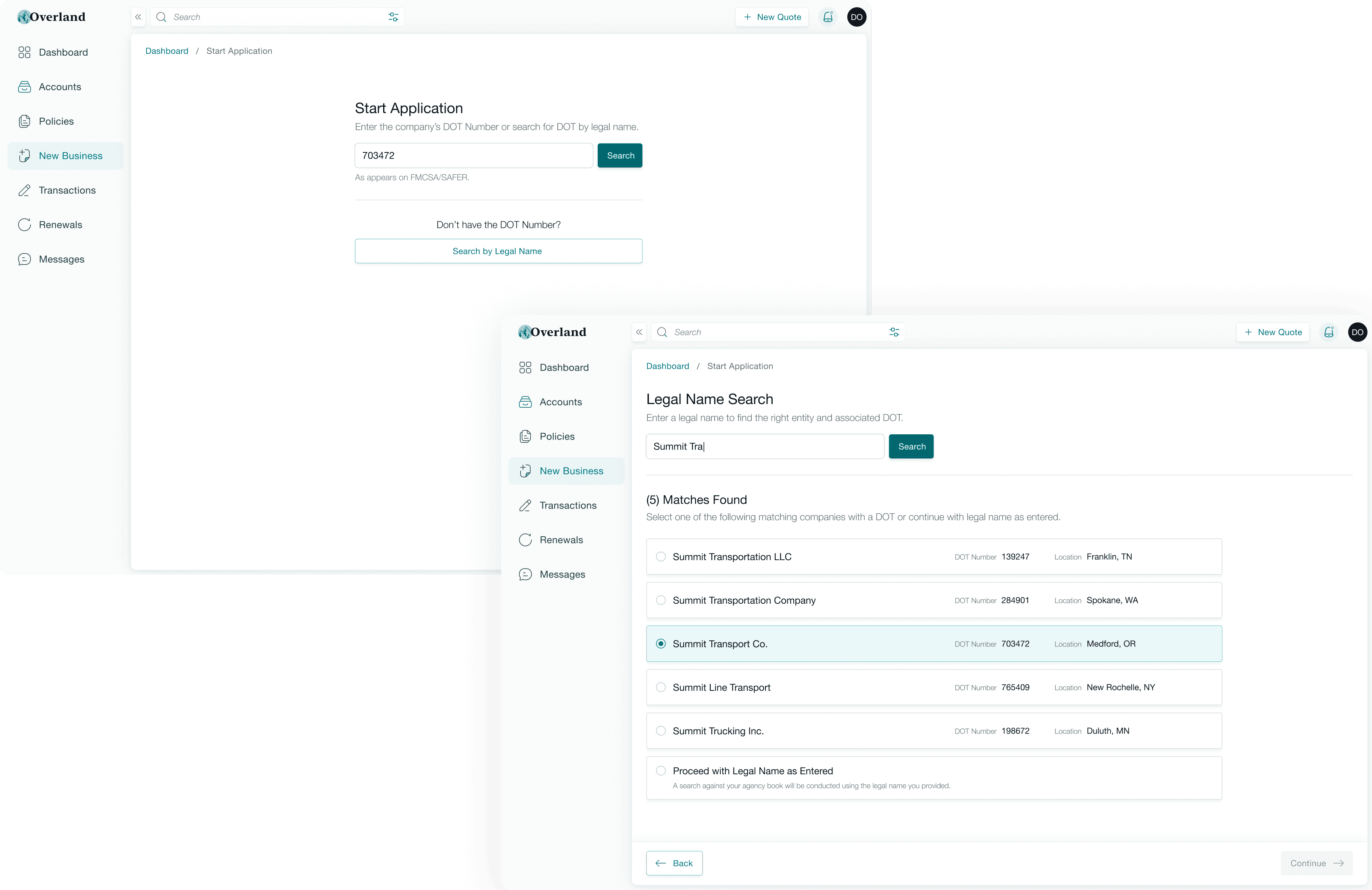
To prevent duplicate quotes and improve coordination, we introduced a DOT Number Lookup and legal name search during quote creation. This enhancement:
Checks for existing businesses in the system (even partial coverage)
Flags accounts managed by other agents to avoid conflicts
Links new submissions to existing accounts to reduce duplication
Surfaces blacklisted accounts to prevent invalid submissions
Allows searching by legal name when a DOT number isn’t available
Risk Visibility Feature (Internal Name Omitted)
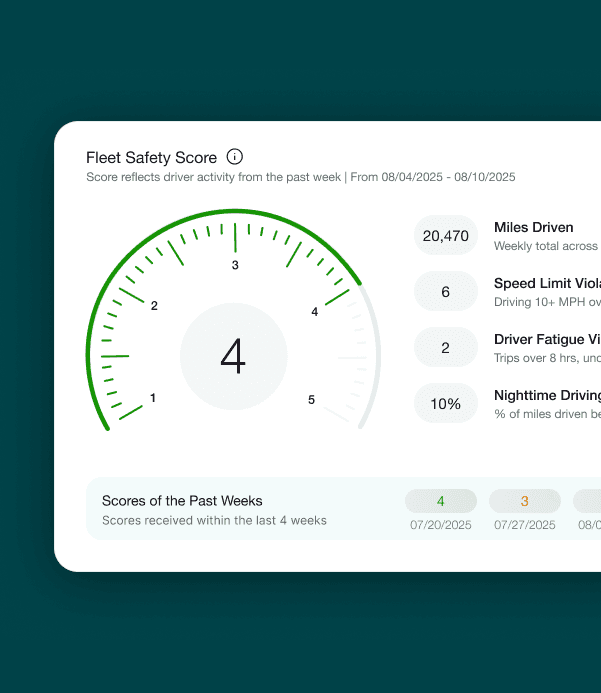
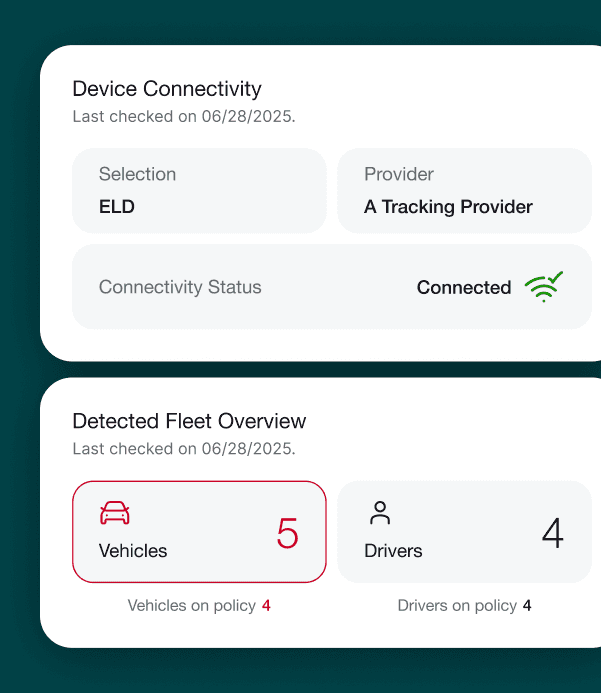
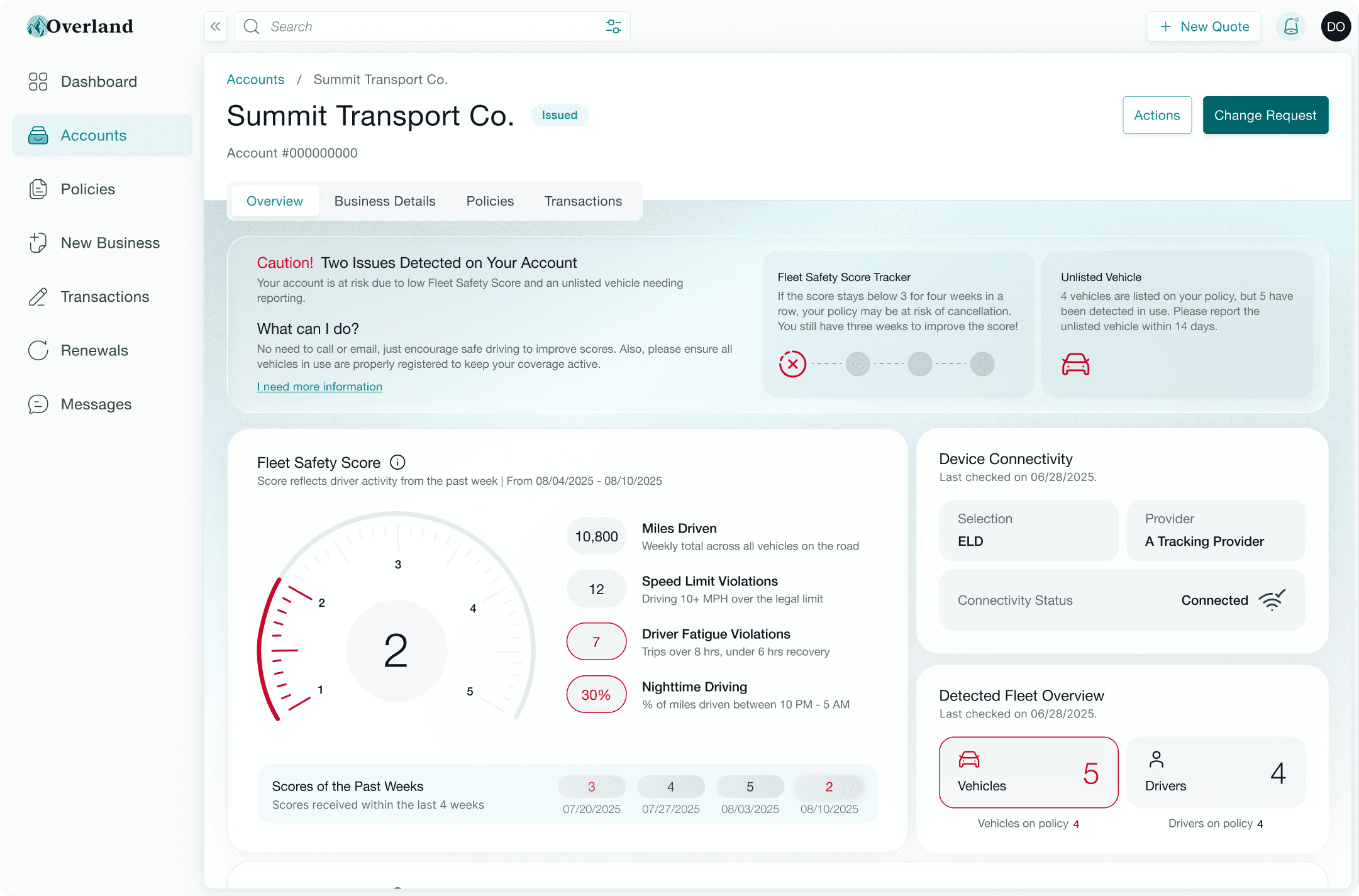
Previously, some policies were cancelled due to consecutive poor driver behavior tracked by dash cams and ELDs, but this wasn’t visible to agents, leading to confusion and unnecessary support calls. There were also cancellations when ELDs or dash cams weren’t connected for extended periods, or when the detected vehicle/driver count didn’t match what was listed on the policy.
Our Solution:
Weekly driving behavior scores, viewable per account
Clear visual indicators of risk (Safe, Warning, At Risk)
Thresholds and rules explained in simple, agent-friendly language
Visual warnings when an account was approaching cancellation risk
Alerts for unconnected ELDs/dash cams
Warnings when detected vehicle or driver count didn’t match the policy
This visibility gave agents more control, helped them take proactive action, and reduced support escalations.
Encouraging Renewals with Incentives
Many agents didn’t realize that good driving behavior could qualify clients for renewal discounts, resulting in numerous missed renewal opportunities.
Our Solution:
Introduced a dedicated “Renewal Discounts” tab on the dashboard, highlighting accounts eligible for discounts as well as those with potential to qualify.
Displayed key trends and top-performing accounts to help agents prioritize their efforts.
Added incentive banners within the Account Overview for immediate visibility.
Incorporated tooltips and callouts to clearly explain discount eligibility criteria.
These improvements guided agents toward stronger client retention and promoted behaviors aligned with underwriting goals.